
Recently, the world’s largest iceberg A23a completed its final collapse, with the remaining area falling below the iceberg range and officially being written off. At the same time, the early spring heatwave in North America has sounded the alarm on climate change, with temperatures in many places exceeding 40℃. Climate crises such as high temperatures, droughts, floods, and melting glaciers have all intensified.
In 2025, the average number of hot days across the country reached 16.5 days (the highest since 1961), and there were 40 occurrences of severe convective weather and 64 meteorological stations recorded wind speeds exceeding historical extremes.
We have to face the reality that extreme weather has transformed from an occasional disaster to a regular part of life. Windows and doors are no longer merely components for lighting and ventilation; they have become the first line of defense against extreme climates and the safeguarding of building safety.
01 In areas prone to typhoons, the requirements for wind resistance pressure are even higher!
trengthening cavity design: By enlarging the strengthening cavity of the cross beam, the wind pressure resistance performance of the cross beam can be significantly enhanced. For instance, if the thickness of the strengthening cavity of the cross beam is increased from 20mm to 80mm, the effective moment of inertia will increase significantly, thereby improving the wind pressure resistance capability.
Built-in reinforcing material: A galvanized steel tube is installed inside the middle beam cavity. Without increasing the external dimensions, this further enhances rigidity and stability.
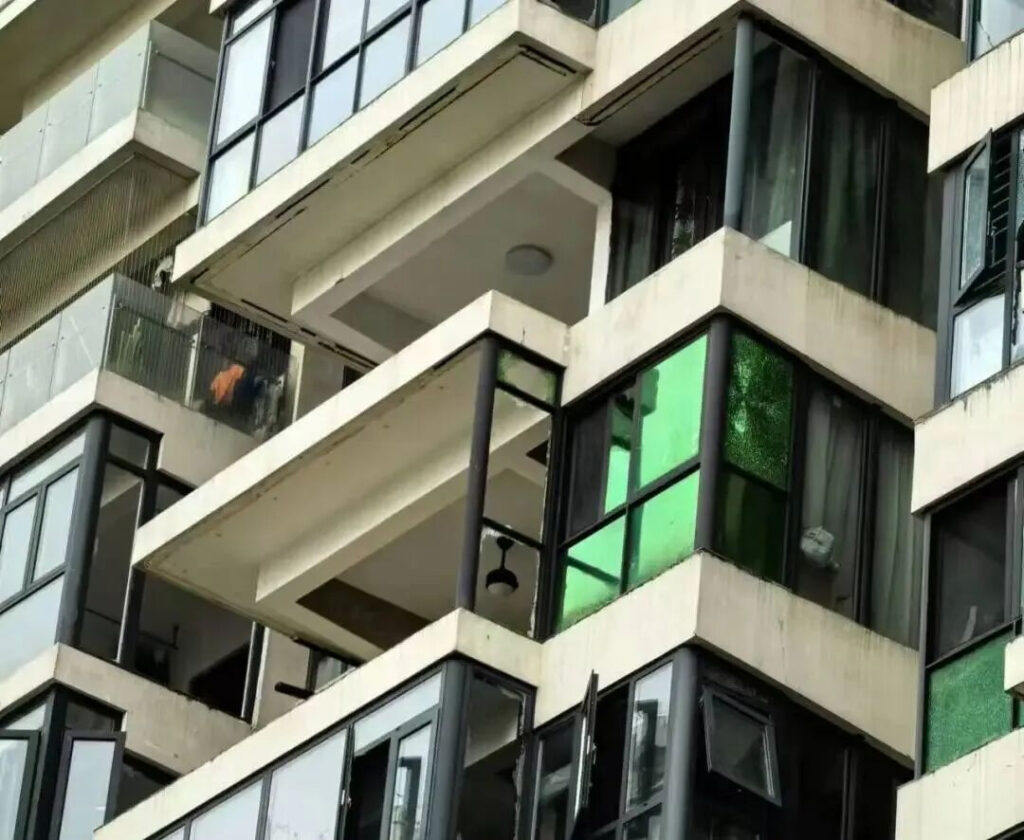
▲Residential buildings by the sea in Haikou saw their entire floor-to-ceiling glass windows blown away by the wind.
02 Watertight Performance: In the Face of Backflow Rainfall
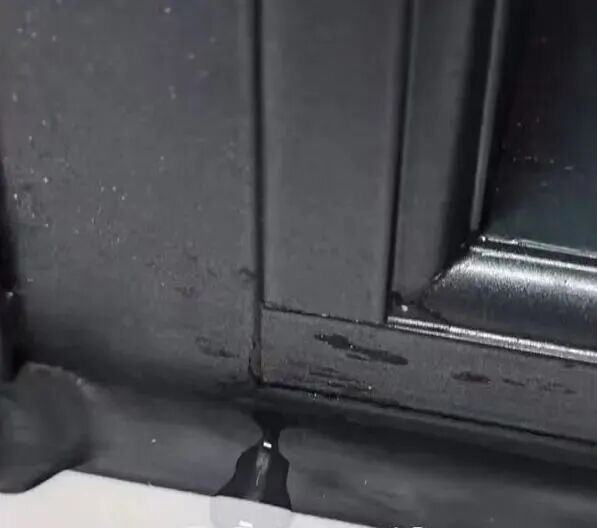
Severe convective weather is often accompanied by short-term heavy rainfall with large wind volume. If the drainage design of the window sill is improper or the rubber strips are worn out, water accumulation will be “forced” into the room under the effect of wind pressure.
If the position of the drainage holes for doors and windows is incorrect, rainwater cannot be discharged normally and thus flows into the room. Excessive gaps in the outdoor glass miter joints, large errors between the window sash and the frame, etc., may also cause leakage.
Safety Checklist: Multi-Viewpoint Safety Consensus
Installation: Three parts material, seven parts assembly. The spacing of the expansion bolts during installation and the quality of the foam filling directly determine whether the window will shake during a storm.
Balanced window-to-wall ratio: Excessive floor-to-ceiling windows not only increase energy consumption but also pose structural risks.
Recommended low-energy solution: Consider using Low-E glass to reduce the indoor heat radiation pressure caused by extreme temperatures.
System window thinking: Emphasizes the synergy of insulation profiles, glass, hardware, gaskets, and craftsmanship, rather than merely stacking expensive materials.